


Internet of Things (IoT) Test Solutions
Whether working to optimize power consumption, deploy sensor arrays, debug serial communications, or efficiently integrate wireless technologies RIGOL Technologies has a solution to speed your IoT development. Our portfolio of time and frequency domain test solutions provide you with the advanced analysis capabilities you require at transformational price points. With complete IoT test solutions at a fraction of the cost we deliver unprecedented customer value to those enabling the Internet of Things.

IoT Power Analysis
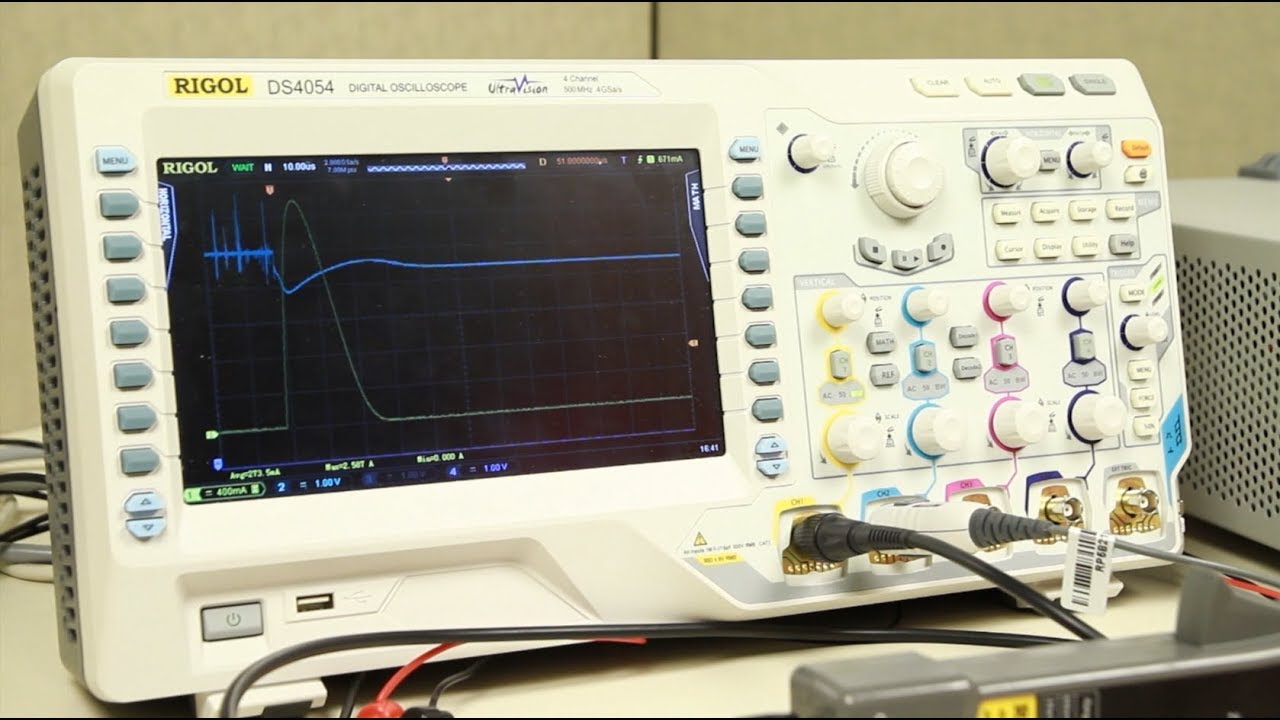
Debug & Analysis of Power Requirements
One of the most important steps in IoT development is determining the balance between battery life and function. Should we use a larger battery? Should we reduce radio communication? Learn our approach to understanding your power usage and avoid design requirement changes that can derail your IoT product.
Better understand how your IoT project will consume power and shorten battery life start with a test regiment of baseline power analysis. Understand the nominal power usage, the bootup energy requirement, and the power used by peripherals that will be needed. Limit late stage design changes to the project by iteratively testing power usage as you update the software and hardware configurations of your platform.
Learn More

Real-world measurements and techniques for understanding how IoT platforms draw and utilize power and what it means to the overall product design

Evaluate errors in low speed serial embedded signals caused by timing, noise, signal quality, and data issues with an advanced oscilloscope
Instruments we used


IoT Power Characterization with an Electronic Load
An important aspect to bringing an IoT product to market is understanding how long the devices battery will last. Will the device have enough power to operate for the desired period of time? Learn how we approach prolonged battery testing.
In order to further understand how your IoT devices will consume power and shorten the battery life you need to understand how the device draws power during its nominal power usage, bootup cycle and from peripheral power draw. With this information, you can use an electronic load to simulate similar current draw scenarios over an extended period of time. This way we can test how a battery will perform under real world use cases as part of an IoT product. Ultimately, this provides more reliable battery requirements data to ensure your IoT product meets customer expectations between recharges or battery replacements.
Learn More
Real-world measurements and techniques for understanding how IoT platforms draw and utilize power and what it means to the overall product design
Evaluate errors in low speed serial embedded signals caused by timing, noise, signal quality, and data issues with an advanced oscilloscope
Instruments we used

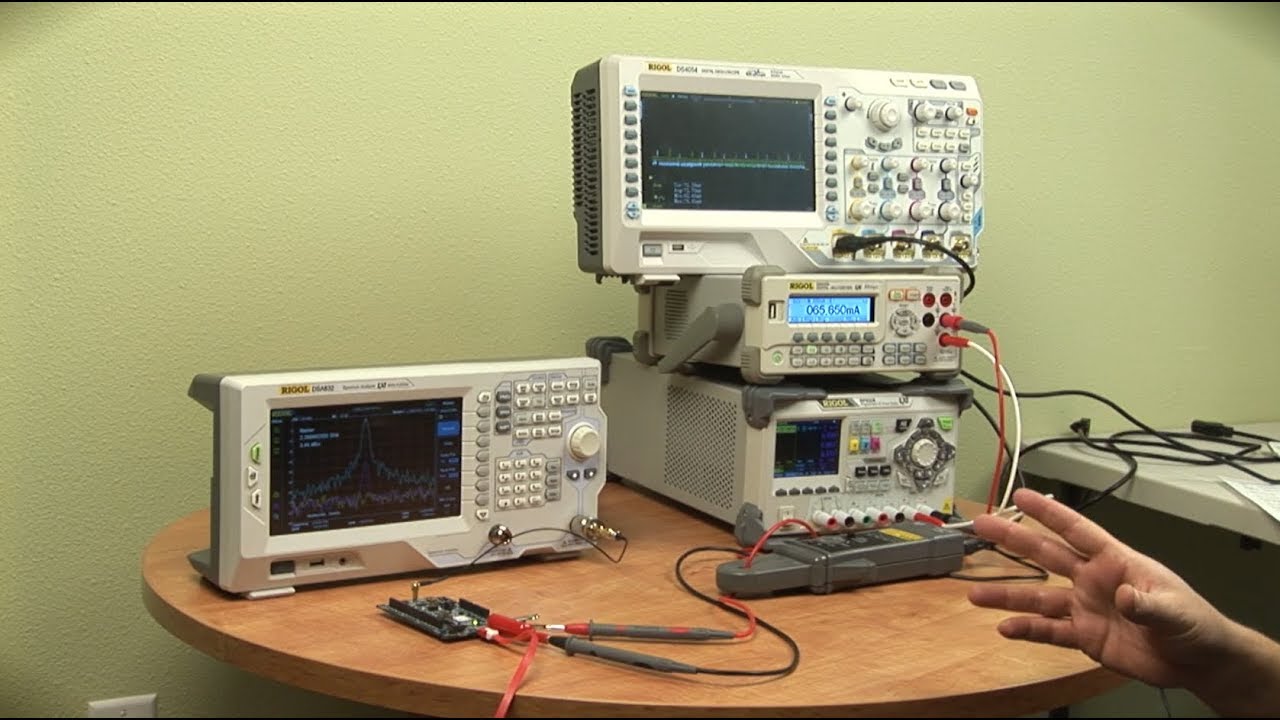
2.4 GHz Radio IoT Power Usage
One of the important power uses of an IoT device is it’s RF output power, but how much power does it take to run the entire RF peripheral and how do you optimize it? Evaluate RF power throughout development and characterize power use in different modes.
Whatever your IoT passion, your product likely connects wirelessly to a network, sensors, or both. In the 2.4 GHz band Bluetooth, Wi-Fi, Zigbee, and many other wireless protocols compete for data bandwidth. Evaluating the battery implications of exchanging RF data is an important element in understanding the overall operation of any IoT device. Using a IoT development platform we compare methods for measuring the power consumed by different radio operating modes.
Learn More
Real-world measurements and techniques for understanding how IoT platforms draw and utilize power and what it means to the overall product design

RF Design and Test Fundamentals from terminology through advanced EMI debugging
Instruments we used

Wireless Sensor Characterization

Characterize ASK/FSK Sensor Communication
Many IoT sensors connect wirelessly to the main application platform over one of many ASK or FSK protocols from 800 or 900 MHz bands up through 2.4 GHz. Characterizing how these sensors perform in real world environments is critical to understanding how best to implement network communication, range, and sensor deployment.
Even the simplest sensors and communication protocols need to be characterized before sending an IoT device to market. Characterize error budgets for timing, radio power, and modulation settings in a real environment before critical baseband data errors effect performance. Use a Spectrum Analyzer’s real time bandwidth to analyze the RF signal.
Learn More

Application details on using a DSG800 series Signal Source to emulate and debug 2.4 GHz RF systems

Learn the basics of Keyless Entry Development testing by modulating, demodulating, and analyzing common ASK and FSK signal types
Instruments we used


Sensor Emulation
Developing an IoT platform that coordinates sensor data adds complexity to any project. Working with mesh networks like Z-Wave or Zigbee can make root cause analysis of problems more difficult. Emulate data from known nodes or interfering networks to understand how a system will operate in real world conditions.
Emulate sensor to hub communication and interference to verify reliability and function in standardized protocols like Z-Wave. Use demodulation and analysis to verify performanc and analyze the communication performance of the protocol.
Instruments we used
Serial Communication

Decode and Analyze LSS Communication in an IoT Design
Many IoT sensors connect over low speed serial whether it uses SPI, I2C or one of many others. RIGOL oscilloscopes enable engineers to test signal integrity to find root cause while also decoding data on screen. Record and analyze these data transactions to compare and identify issues that may impact your IoT development.
Low speed serial buses are an important peripheral in many IoT designs due to the number and type of sensors that work on these buses. Investigate and understand timing, decoding, and latency issues that can cause long term reliability and performance issues in your device.
Learn More

Methods for testing signal integrity focused on its role in IoT development with real world examples analyzing serial bus protocol parameters
Evaluate errors in low speed serial embedded signals caused by timing, noise, signal quality, and data issues with an advanced oscilloscope
Instruments we used
RF Signal Analysis

RF Antenna Testing
The tradeoffs between range, responsiveness, and battery life lie at the heart of many IoT development projects. Understand the impacts of these decisions by analyzing how the antenna used can affect the relationship between radio power and range. Characterize antenna sets for VSWR conduct experiments using 2.4 GHz Bluetooth Low Energy signals.
How do you select the best antennas for an IoT application? We consider frequency response, VSWR, and range as key characteristics that help us to understand an antenna’s suitability and its effect on a device’s overall power usage.
Learn More

Analyzing VSWR, range, and bandwidth while selecting antennas for an IoT or embedded project
Evaluate errors in low speed serial embedded signals caused by timing, noise, signal quality, and data issues with an advanced oscilloscope
Instruments we used

Radio Configuration Power Usage
One of the important power uses of an IoT device is it’s RF output power, but how much power does it take to run the entire RF peripheral and how do you optimize it? Evaluate RF power throughout development and characterize power use in different modes.
Whatever your IoT passion, your product likely connects wirelessly to a network, sensors, or both. In the 2.4 GHz band Bluetooth, Wi-Fi, Zigbee, and many other wireless protocols compete for data bandwidth. Evaluating the battery implications of exchanging RF data is an important element in understanding the overall operation of any IoT device. Using a IoT development platform we compare methods for measuring the power consumed by different radio operating modes.
Learn More
Real-world measurements and techniques for understanding how IoT platforms draw and utilize power and what it means to the overall product design
RF Design and Test Fundamentals from terminology through advanced EMI debugging
Instruments we used

Enclosure Interference Analysis
Between debugging the embedded code and turning the final board revisions don’t lose sight of how the end user interacts with the IoT device. Some wireless protocols like NFC have very small acceptable distance ranges while others are very susceptible to interference from an enclosure. Compliance measurements also have an impact on your enclosure design. Use spectrum analysis to make sure your product will work reliably once it is all together.
Testing different materials and demonstrating their effect on NFC communication in a short range experiment can be straightforward with the correct probes and instruments to capture the NFC response from an IoT device and a smartphone or other NFC master.
Learn More

RF Design and Test Fundamentals from terminology through advanced EMI debugging

This application note covers hints and tips for the implementation of precompliance steps to help lower the cost of full compliance EMC testing. It also features a series of documents that have practical use details for EMC testing.
Instruments we used
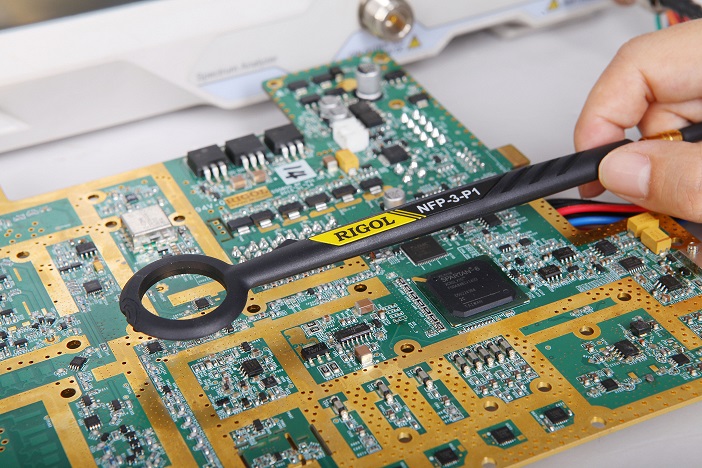
EMI PreCompliance
Don’t wait until the end to verify compliance, conduct PreCompliance tests throughout the design cycle to avoid costly delays and rework. Test boards and enclosures for radiated emissions and immunity to interference as you prototype and refine the overall design.